If you’re searching for security guards, you’re probably facing one of two situations: you need to protect a property, event, or business right now, or you’re trying to understand what you’re actually paying for before you sign a contract. Either way, not all security guards do the same job — and picking the wrong type can leave real gaps in your protection.
This guide breaks down the different types of security guards, what they actually do day to day, how much they typically cost, and the questions to ask before you hire one.
What Do Security Guards Actually Do?
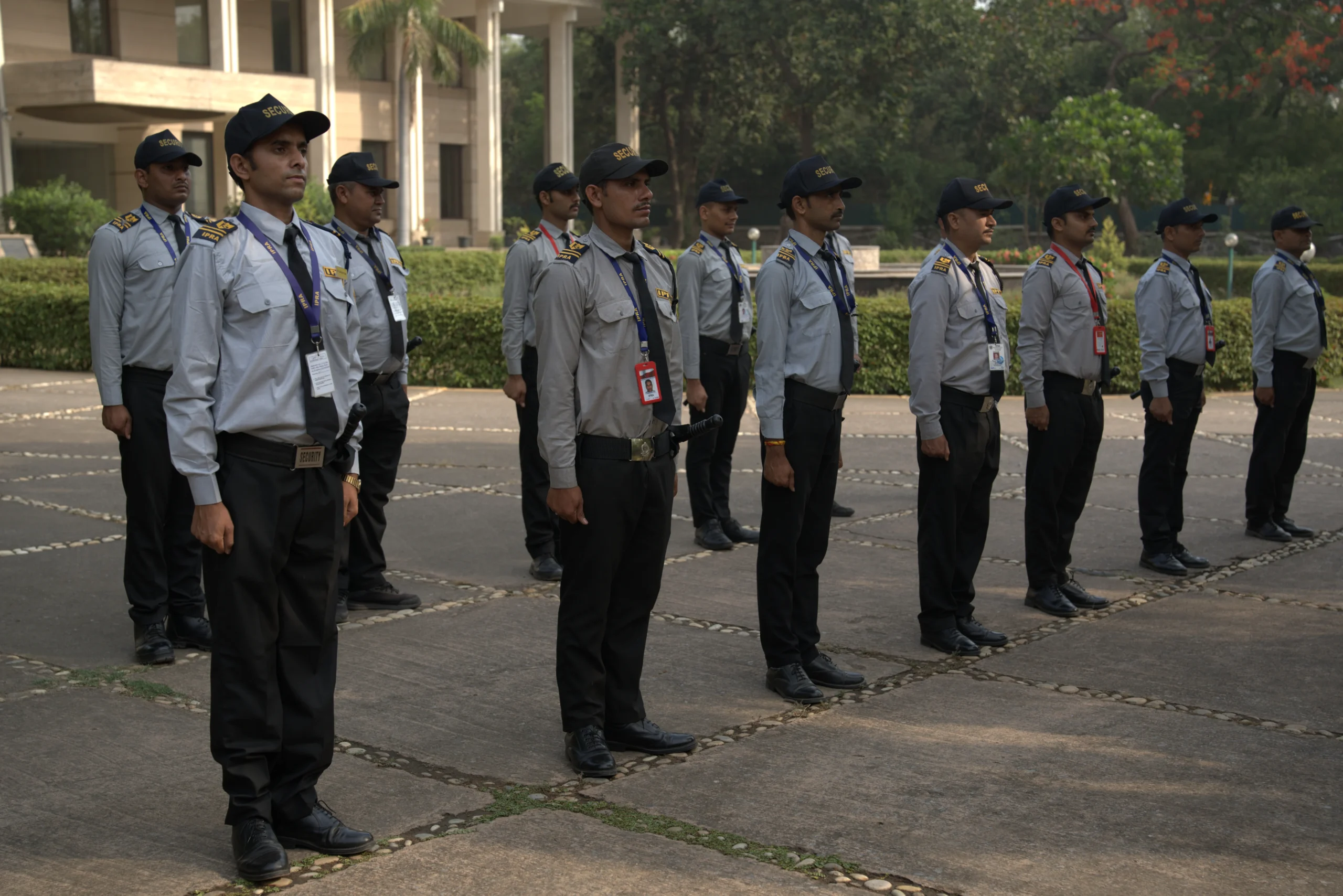
Security guards aren’t just people standing at a door. Depending on the role, their responsibilities can include:
- Monitoring entry and exit points
- Patrolling premises on foot or via vehicle
- Operating CCTV and alarm systems
- Checking IDs and managing visitor logs
- Responding to incidents, theft, or disturbances
- De-escalating conflicts before they turn into bigger problems
- Writing incident reports for clients or law enforcement
A good guard is trained to observe, deter, and respond — not just be a visible presence.
Types of Security Guards
1. Unarmed Security Guards The most common and cost-effective option. Used for offices, retail stores, residential complexes, and events where the primary need is deterrence and monitoring rather than armed response.
2. Armed Security Guards Trained and licensed to carry weapons, typically used for high-risk environments — banks, cash-in-transit, VIP protection, or high-value assets. Armed guards usually cost more due to licensing, training, and insurance requirements.
3. Event Security Hired for weddings, concerts, corporate events, and private functions. Focused on crowd control, entry management, and handling disturbances in high-traffic settings.
4. Executive Protection / Personal Bodyguards Dedicated to protecting a specific individual — executives, celebrities, or high-net-worth clients. Often trained in close protection tactics, defensive driving, and threat assessment.
5. Patrol Security Services Guards who cover multiple properties on a scheduled route rather than staying stationed at one site — common for gated communities, industrial parks, and construction sites.
6. 24-Hour Security Guards Round-the-clock coverage, often rotated in shifts, used for facilities that never fully close — warehouses, hospitals, data centers, and manufacturing plants.
How Much Do Security Guards Cost?
Pricing varies widely based on location, guard type, and contract length, but a few factors consistently drive cost:
- Armed vs. unarmed — armed guards typically cost 30–60% more
- Shift length and coverage hours — 24/7 coverage costs more than daytime-only
- Number of guards required — larger properties or events need more coverage
- Experience and certifications — specialized training (executive protection, crowd control) adds to the rate
- Contract length — long-term contracts often come with better per-hour rates than one-off event hires
Rather than comparing quotes on price alone, ask what’s actually included: licensing, insurance, background checks, and supervisor oversight can vary a lot between providers even at similar price points.
How to Choose the Right Security Guard Company
Before signing with any security guard agency, check for:
- Licensing and certification — confirm guards are certified for the specific role you need (armed vs. unarmed have different requirements)
- Insurance coverage — the company should carry liability insurance that covers incidents on your property
- Background checks — ask how guards are vetted before deployment
- Response protocols — how are incidents documented and escalated?
- Reviews and track record — look for a company with verifiable experience in your specific use case (retail, events, corporate, residential)
- Flexibility — can they scale coverage up or down as your needs change?
Do You Actually Need Armed Security?
This is one of the most common questions clients ask, and the honest answer is: probably not. Most businesses — retail stores, offices, residential buildings — are well served by unarmed guards trained in observation, de-escalation, and emergency response. Armed security makes sense for high-risk environments like cash handling, high-value asset protection, or specific threat situations. Going armed by default usually adds cost without adding real value.
Final Thoughts
The right security guard setup depends entirely on what you’re protecting and the actual risk level involved — not just what sounds most secure on paper. Start by defining your specific need (deterrence, monitoring, crowd control, executive protection), then match that to the guard type and provider that specializes in it.
FAQs
What’s the difference between a security guard and a security officer? The terms are often used interchangeably, though “security officer” sometimes implies a more senior or specialized role with additional training or supervisory duties.
Can security guards make arrests? In most jurisdictions, security guards have the same citizen’s arrest powers as any private individual — they are not law enforcement and typically detain rather than arrest, then hand the situation to police.
How quickly can I hire a security guard for an event? Reputable agencies can often deploy guards within 24–48 hours for events, though last-minute requests may have limited guard availability or higher rates.
Do security guards need to be licensed? In most regions, yes — licensing requirements vary by state/country and by whether the role is armed or unarmed.
Suggested CTA
“Looking for reliable security guards for your business, event, or property? [Get a free quote] and we’ll match you with the right coverage for your needs.”
Internal Linking Suggestions
- Link “armed security guard” → dedicated armed security services page
- Link “event security” → event security services page
- Link “security guard company” → About/Why Choose Us page
- Link “security guard agency near me” → location/service area page
Image Suggestions
- Guard at building entrance (hero image)
- Uniformed patrol guard on rounds
- CCTV monitoring station
- Event security checking bags/IDs